



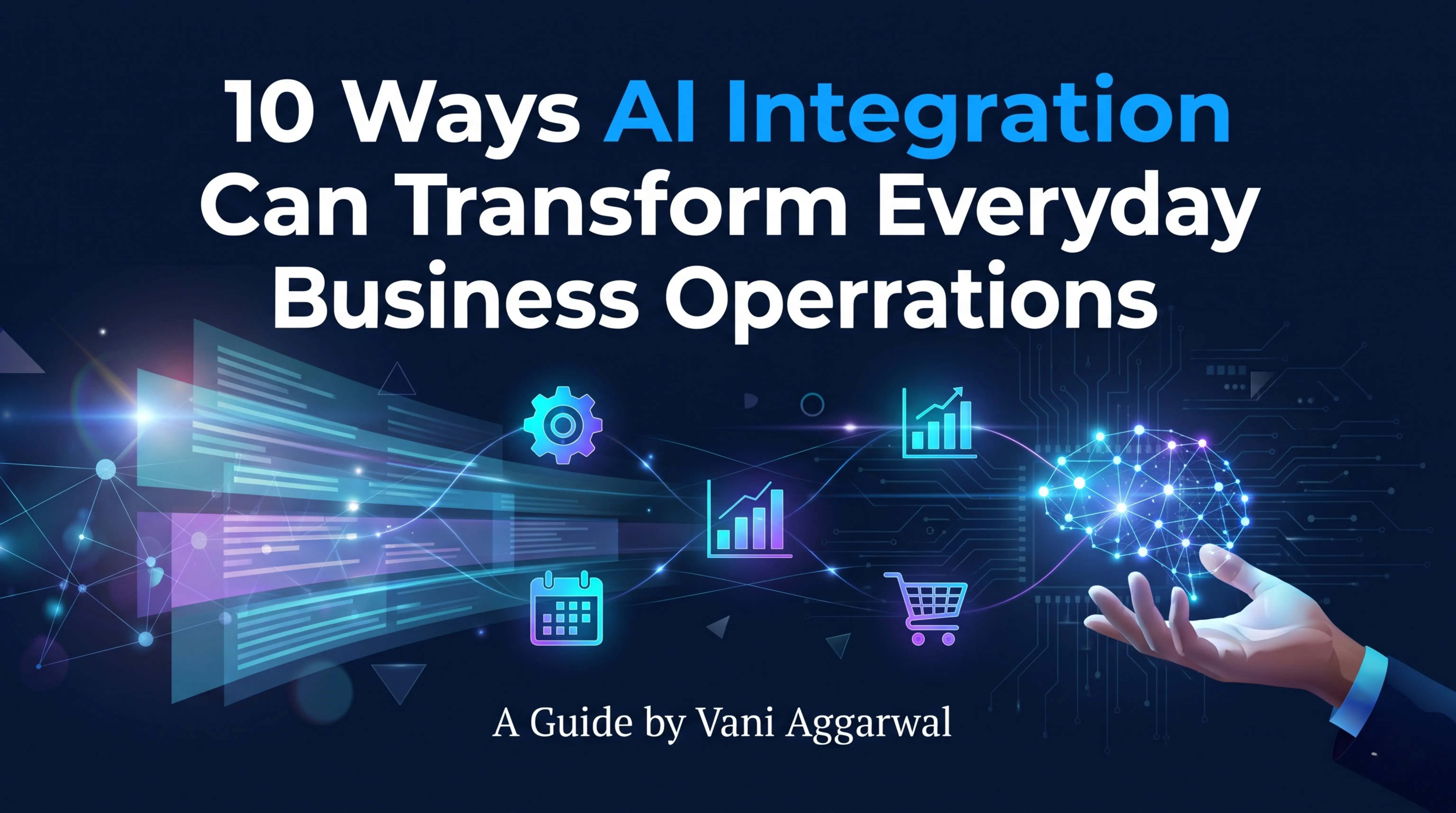
As your business grows it can feel like you’re constantly trying to put a plane back together mid-air. You’re having to keep track of your supply chains, provide support to customers and make sure your invoices are matching up while your different departments are all on the same page. By utilising AI for business operations, led by experts like Vani Aggarwal, practical business leaders are ensuring that their business runs as efficiently as possible day to day.
By embedding AI into your current tools, you’ll automatically be taking over repetitive data tasks and allowing your team to focus on strategic planning, client relations and creativity. Below we’ve outlined 10 practical ways that intelligent systems are helping streamline business operations and why working with an AI transformation consultant like Vani Aggarwal will help you see real results from your software.
1. Automate Repetitive Tasks
No one wants to manually enter data from PDFs into spreadsheets. Intelligent document tools can extract data from receipts, supplier agreements and onboarding documents with a high level of accuracy. By implementing AI business operations you can eliminate manual mistakes, speed up your records and save your admin team hours of work each week.
2. Improve Customer Support
Today’s customers expect a fast and helpful response at any time of the day or night. Intelligent virtual assistants can answer common queries, refer complicated queries to the right expert and summarise long emails. One of the immediate impacts of implementing AI in business operations will be quicker response times and increased customer loyalty.
- Forecast Inventory Requirements
Running out of stock means losing revenue whilst over ordering ties up your working capital. By analysing historic data, seasonal trends and supplier lead times AI can predict what inventory you need. Many brands will work with an AI transformation consultant like Vani Aggarwal to ensure that they can integrate their predictive models with their procurement processes.
4. Predictive Maintenance
Waiting until your key machinery or servers break down will cause costly delays. By connecting sensors to your machinery and using Machine Learning you can pick up on early signs of issues such as unusual vibrations and heat spikes. This means you can prevent any potential issues. Often the first place you’ll see the benefits of implementing AI in your operations will be in manufacturing, warehousing or logistics where you’ll be able to move from reactive and chaotic repairs to proactive and cost-effective maintenance.
5. Speed Up Invoicing
By using modern accounting tools you can automatically match your purchase orders to invoices, identify duplicates and categorise expenses. By implementing AI within your finance operations you can speed up your month-end processes and reduce errors.
6. Improve Recruitment Processes
Manually reviewing hundreds of CV’s can take up a lot of time for your HR team and can cause bias. Intelligent recruitment tools can filter candidates based on key criteria, schedule interviews and guide new employees through onboarding. By using AI in business operations you can ensure that your top talent is making a smooth transition from application to day one.
7. Quality Assurance
With high speed camera systems you can review products on your production lines much quicker than manual checks. They will identify any minute faults and stop faulty batches being sent out. The benefits of implementing AI in your operations will be instantly visible as your defect rates will decrease and products will be more consistent.
8. Intelligent Shift Scheduling
Creating shift patterns for your outlets, clinics or support centre can be a complex process. By using predictive scheduling tools you can create balanced shift patterns by considering footfall trends, events in the area and employee availability. By using AI in your operations you can avoid busy periods due to a lack of staff whilst also reducing labour costs during slow periods.
9. Intelligent Meeting Notes & Internal Search
Every month countless hours are lost searching for policy documents or explaining decisions made during last week’s meeting. By using workplace assistants you can automatically create meeting notes, action points and search your company drives using natural language. Often messy documents will be holding your team back so typically the first thing an AI transformation consultant will do is create an organised knowledge base within your company.
10. Dynamic Pricing
Using static price lists means that you’re losing out on revenue if demand changes in the market. By using intelligent pricing tools you can analyse competitor prices, current stock levels and buyer behaviours to suggest the best price changes. One of the biggest benefits of using AI in your operations will be dynamic pricing meaning you can maintain good margins without constantly having to use spreadsheets.
Wrapping It All Together with Vani Aggarwal
True efficiency isn’t about having a range of different apps but streamlining your processes. Whether you start with invoicing or forecasting demand, you will get the best return from using AI in your operations by having clear outcomes.
By working with an experienced AI transformation consultant like Vani Aggarwal you’ll be able to identify any hidden issues, focus on high ROI areas and ensure your team has a smooth transition. By implementing AI step-by-step you’ll be turning what would have been a mundane task into a competitive advantage.
FAQ’S
- How can I begin using AI in my small business?
Use the native automation features in your tools (such as your CRM, accounting and help desk tools) to streamline a single operation (such as invoicing).
- What are the main benefits of using AI in operations management?
Cost reduction, less human error, quicker decision making using data and increasing output without increasing staff.
- When should I employ an AI transformation consultant for business?
If your systems are not integrated, you have messy data or unclear objectives. An AI transformation consultant for business will provide an unbiased plan to get the most out of your ROI.
- Will using AI in Operations Management replace my operations team?
No, AI can be used to compliment your staff. By removing repetitive tasks, your staff can focus on exceptions, vendor management and strategy.
- How long before we see a return on investment from implementing AI in our operations?
Quick wins will be seen in 30-60 days such as routing support. Larger implementations with an AI transformation consultant for business will usually take between 3-6 months to fully get a return on investment.



Share your thoughts