



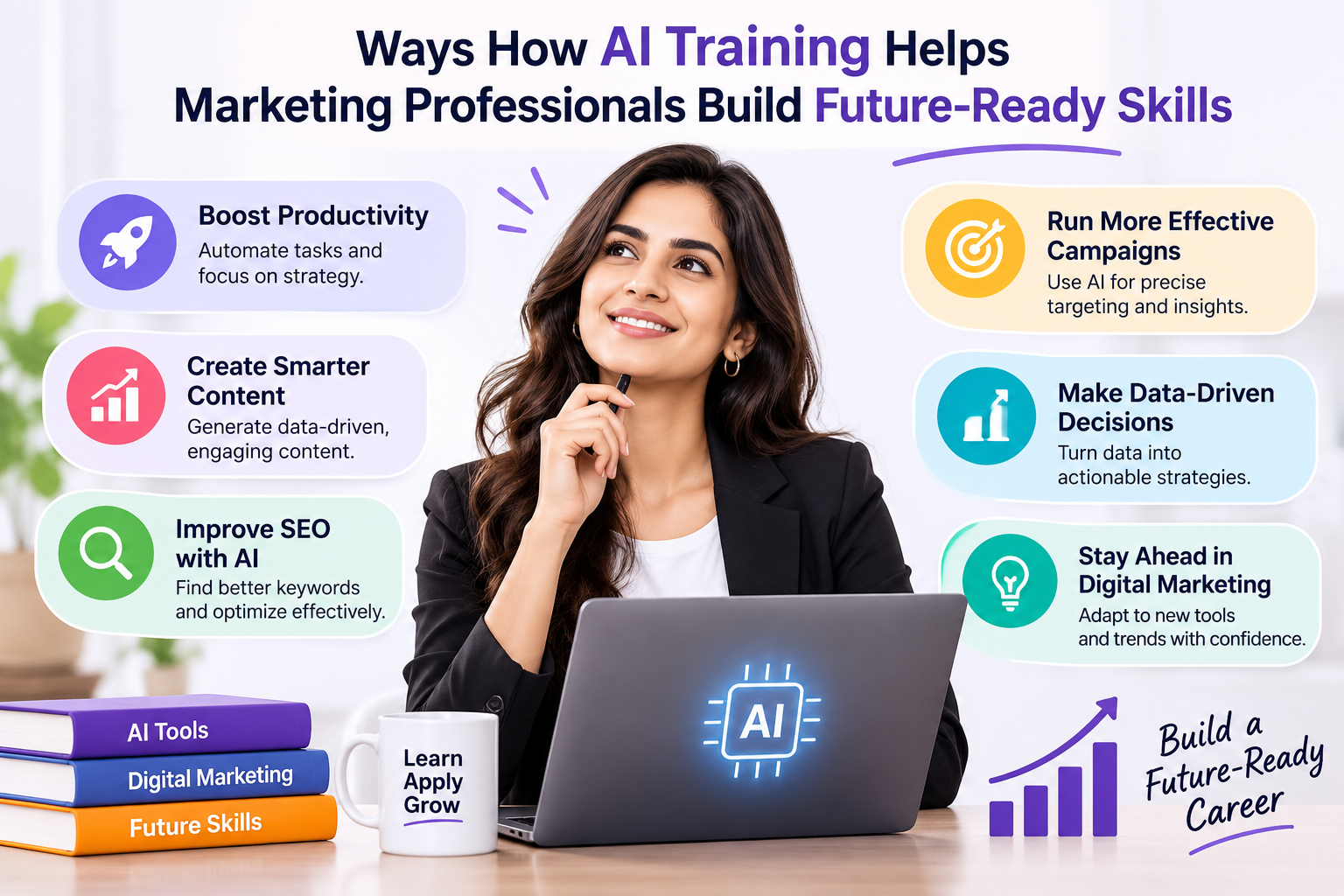
Marketing is no longer limited to creating campaigns, writing content, and managing social media accounts. Professionals are increasingly expected to understand customer behaviour, work with data, manage multiple digital channels, and make decisions quickly. Artificial intelligence is becoming part of these responsibilities, changing not only how marketing tasks are completed but also the skills employers expect from their teams.
For marketers, the real opportunity is not simply learning another technology. It is understanding how to use AI to improve everyday work while keeping creativity, communication, and strategic thinking at the centre. This is where AI training for marketing professionals can make a meaningful difference.
Moving Beyond Basic Marketing Tasks
Many marketing activities involve repetitive work, such as preparing content outlines, organising research, reviewing campaign information, and creating different versions of promotional messages. AI tools can support these activities and help professionals manage their time more effectively.
However, knowing which tool to open is not enough. Marketers need to understand what they want the tool to achieve, how to give clear instructions, and how to assess the final result.
Practical training helps professionals develop this understanding. Instead of depending on random prompts, they learn to build repeatable processes that support their actual marketing responsibilities.
Developing Skills That Matter in a Changing Industry
Future-ready marketers need a combination of technical awareness and traditional marketing knowledge. Some important areas include:
AI-assisted content development: Learning how to generate ideas, create outlines, explore different content formats, and refine drafts without losing the brand’s voice.
Smarter audience research: Using AI to organise customer feedback, identify recurring questions, and explore audience interests. Findings should still be checked against reliable research and customer data.
SEO and content planning: Understanding how AI can assist with topic research, keyword grouping, search intent analysis, and content briefs while keeping content useful and relevant to readers.
Campaign analysis: Learning to organise performance information, identify possible patterns, and develop questions that can guide further investigation.
Workflow automation: Recognising repetitive activities that could be streamlined, such as routine reporting or campaign preparation, while maintaining appropriate human review.
These skills help marketers become more adaptable rather than dependent on one particular AI platform.
Making Better Decisions, Not Just Working Faster
Speed is one advantage of AI, but good marketing still depends on sound decisions. A tool can suggest several campaign ideas, generate audience profiles, or summarise performance data. It cannot automatically understand every business priority, customer concern, or brand responsibility.
Training helps professionals question AI-generated suggestions instead of accepting every output as correct. They learn to check facts, identify weak assumptions, consider context, and decide when human judgement is necessary.
This ability becomes particularly valuable when marketing teams handle sensitive topics, customer information, financial claims, or campaigns that require careful brand communication.
Building Confidence Through Practical Learning
The most effective way to understand AI is to apply it to real work. A marketing professional might begin with a familiar task, such as preparing a monthly content calendar.
They can use an AI tool to explore topic ideas, organise them by audience interest, and develop an initial schedule. The marketer then reviews the suggestions, checks their relevance, and adjusts the calendar according to the company’s goals.
This process teaches more than a list of prompts. It develops practical judgement, problem-solving, and the confidence to experiment with new workflows.
A structured AI training for marketing professionals programme can help connect these exercises with everyday responsibilities, making the learning more relevant to actual workplace needs.
Understanding Responsible AI and Data Protection
As AI becomes more common in marketing, responsible use is an essential professional skill. Marketers may work with customer information, campaign reports, unpublished business plans, and internal documents. Sharing this information with an AI platform without checking its privacy and data-use policies can create unnecessary risks.
Training should therefore explain data protection, content accuracy, copyright considerations, bias, and the importance of human oversight. Professionals should understand which information can be used with approved tools and which details must remain confidential.
Responsible AI practices help businesses build trust while exploring new ways to work.
How Vani Aggarwal Supports Practical AI Learning
Vani Aggarwal works across AI strategy, content strategy, filmmaking, and corporate training. Her approach connects technology with practical business requirements, helping teams understand where AI can fit into their existing workflows.
Her corporate AI training focuses on hands-on learning built around real team operations rather than generic tool demonstrations. This approach can help marketing and creative teams explore useful applications, improve processes, and understand where human judgement remains important.
For professionals and organisations looking to strengthen their capabilities, AI training for marketing professionals can be a practical starting point for developing skills that remain useful as tools and marketing practices continue to change.
Conclusion
The future of marketing will require more than familiarity with AI tools. Professionals will need the ability to combine technology with creativity, analytical thinking, communication, and responsible decision-making.
By learning how to apply AI to research, content development, campaign analysis, and workflow improvement, marketers can become more confident and adaptable in their roles. The goal is not to let technology make every decision, but to use it thoughtfully to support better marketing work.



Share your thoughts